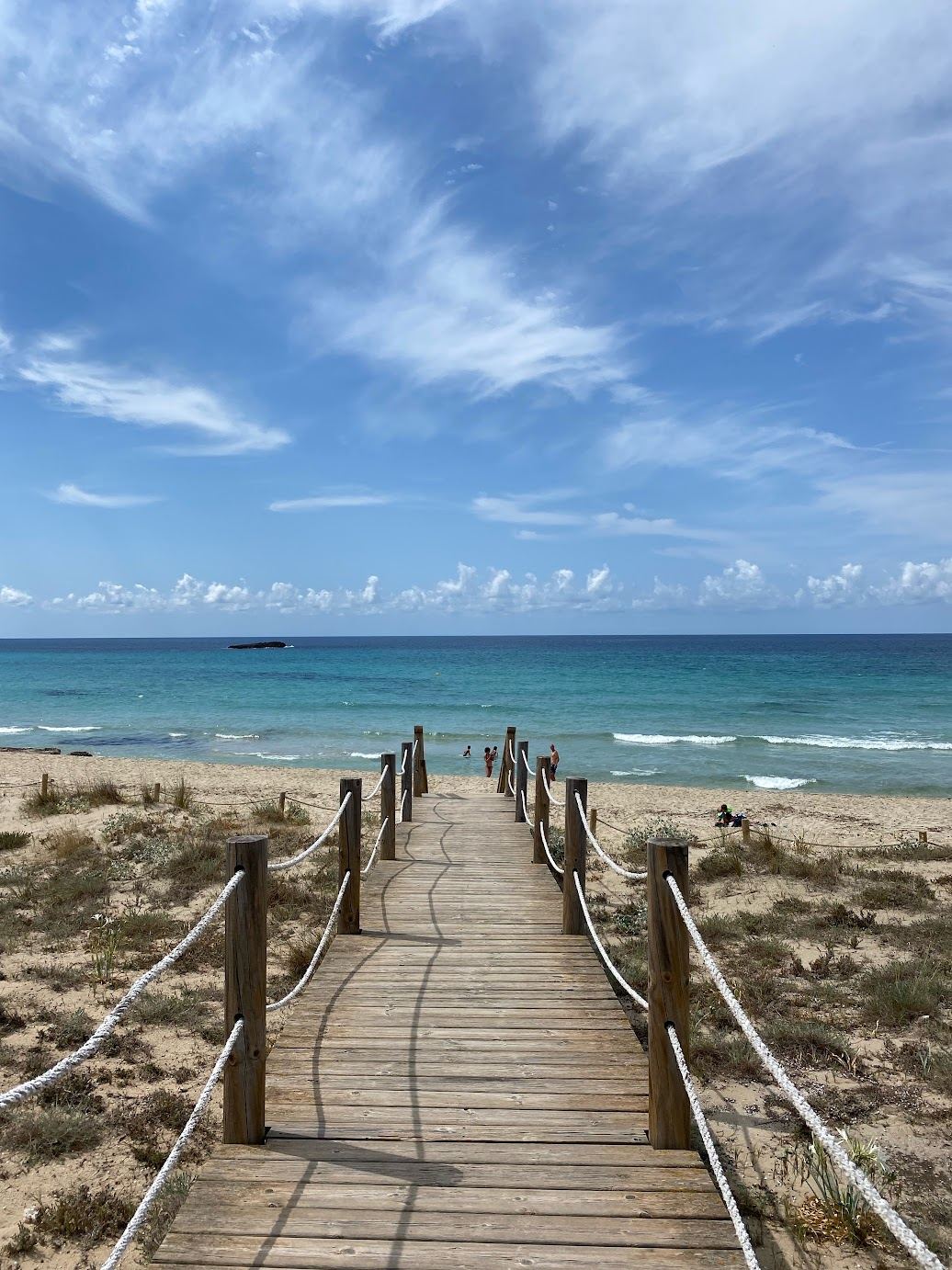
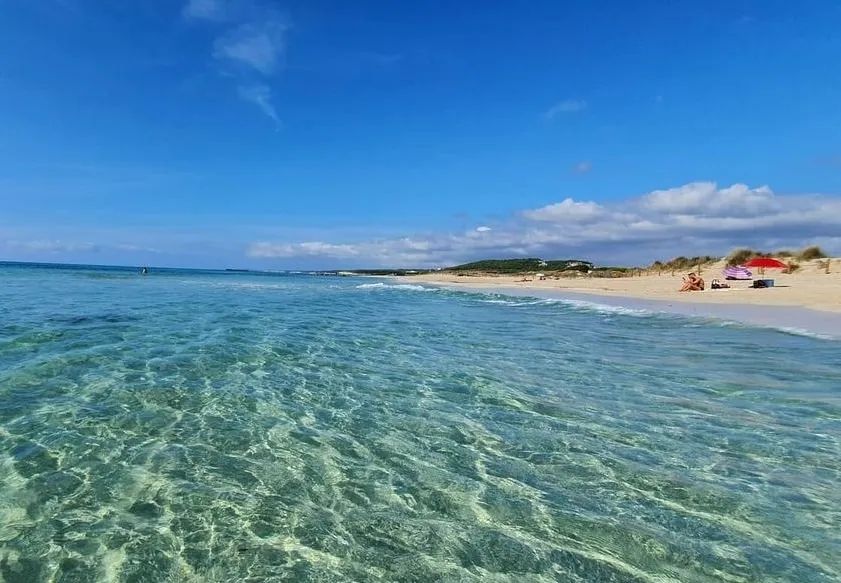
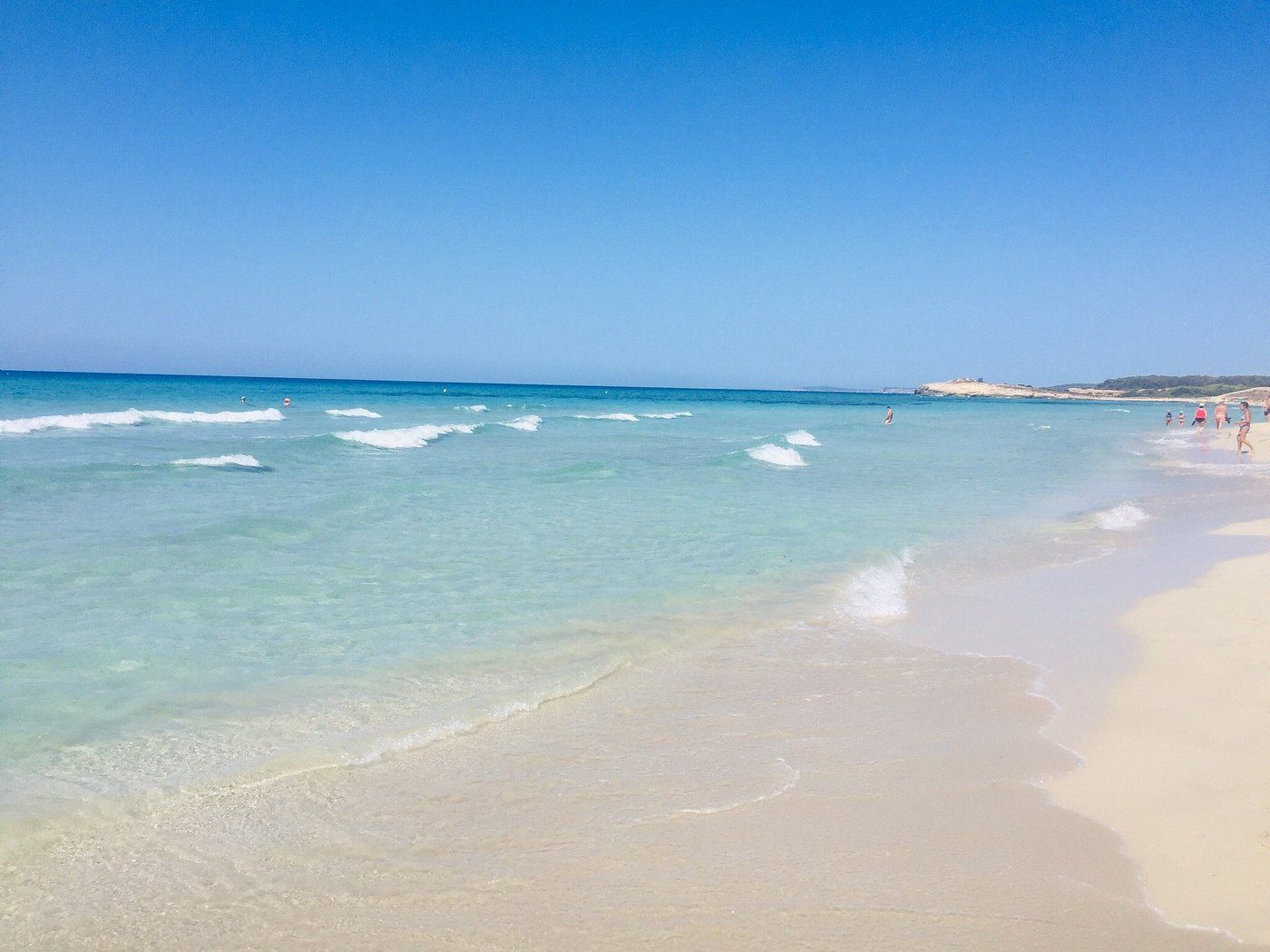
Son Bou Beach is well known to be the best beach on the island due to the clear water, easy access, parking and amenities. Son Bou is the longest and largest beach on Menorca, stretching approximately 1.5-1.8 miles along the island's southern coast.
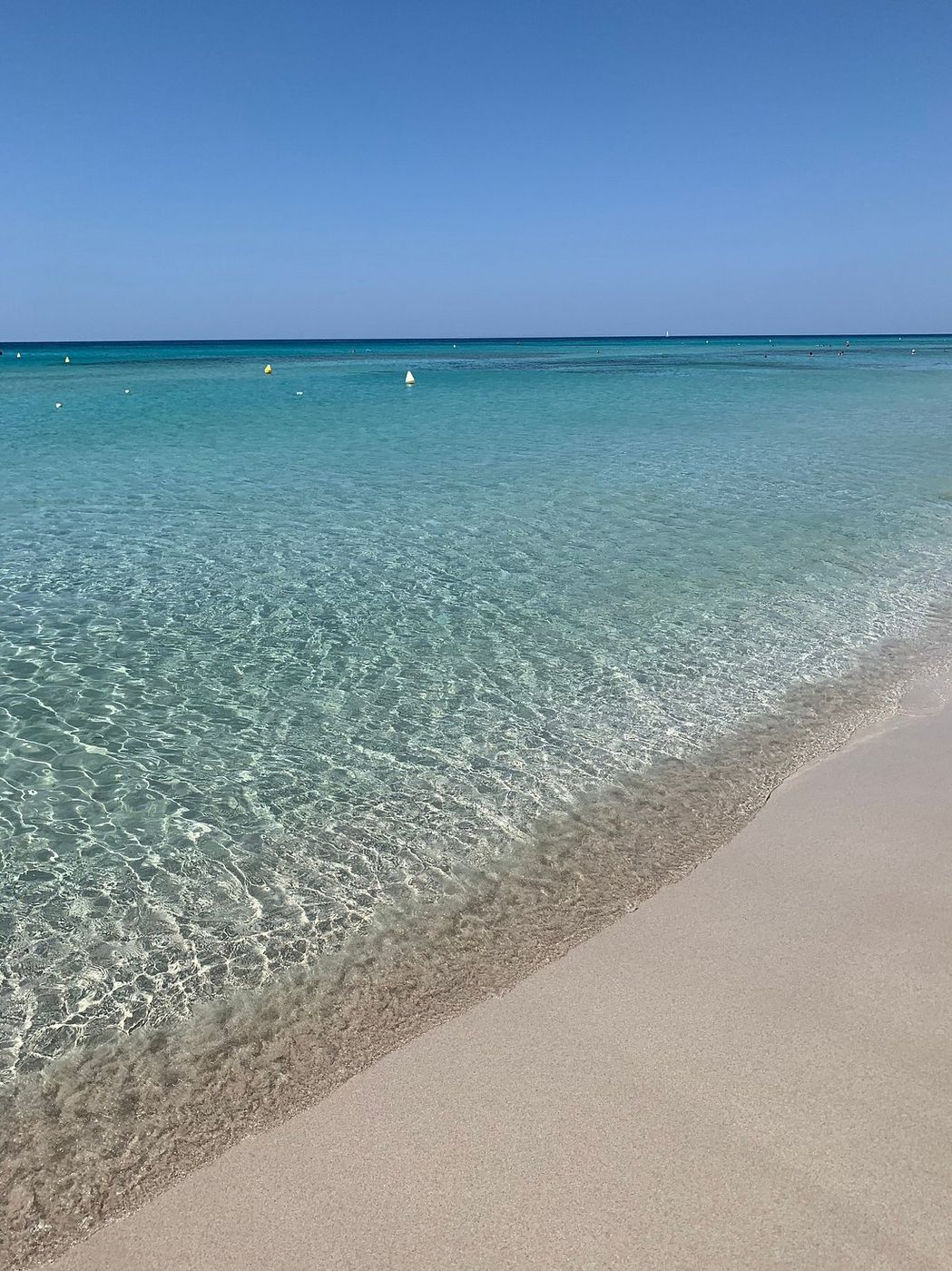
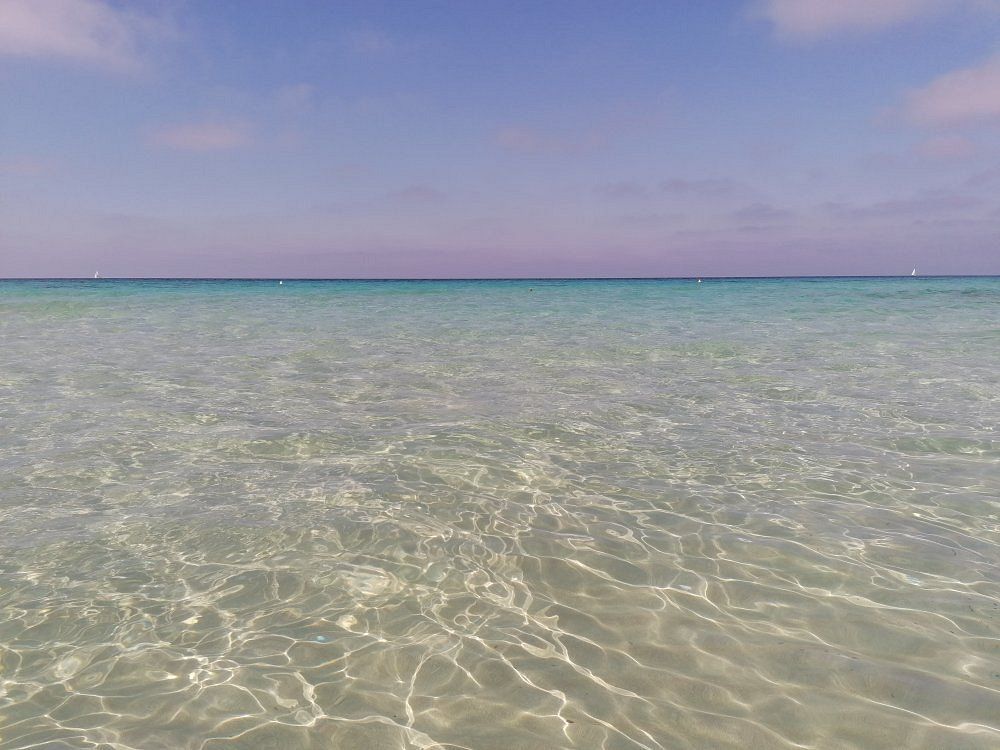
It's distinguished by fine white sand, crystal-clear shallow water, and its status as one of the few open-sea beaches on the island, rather than a sheltered cove.

A "Blue Flag" Rated Beach
Son Bou beach is certified for water cleanliness, utilities, and lifeguard coverage. It was revalidated as a "Blue Flag" beach in 2026. Only three beaches on Menorca hold this certification.
Lifeguards
The beach has a full lifeguard team and service. There is also the Red Cross stand with a first aid service and rescue boats.
There are flags above the main Red Cross HQ that will inform you of the safety level of the sea. Look at the color of the flags:
Prat de Son Bou
Directly behind the dunes stretches one of Menorca's most important wetlands, a protected reserve considered a botanical and bird wildlife paradise under Natura 2000 listing
Umbrellas and Loungers
Sun loungers and umbrellas are available to rent right on the beach. Just grab one, an attendant will be over very promptly, but bring cash for the payment. I think is 20 euro for 2 loungers and umbrella a day.
Parking
The beach is the most accessible beach on the island. There's a large parking area, and no cost to park. It does get very busy.
Beach Bars
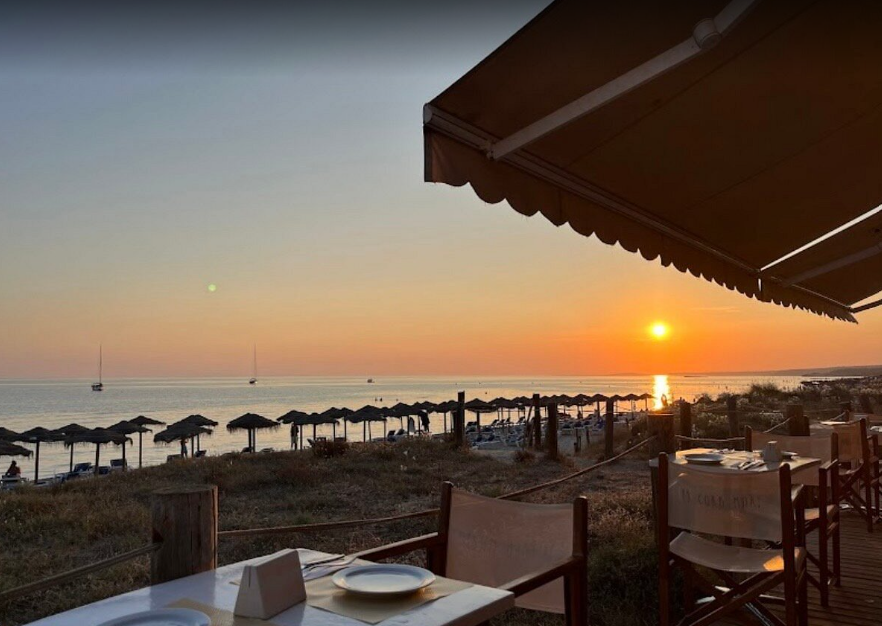
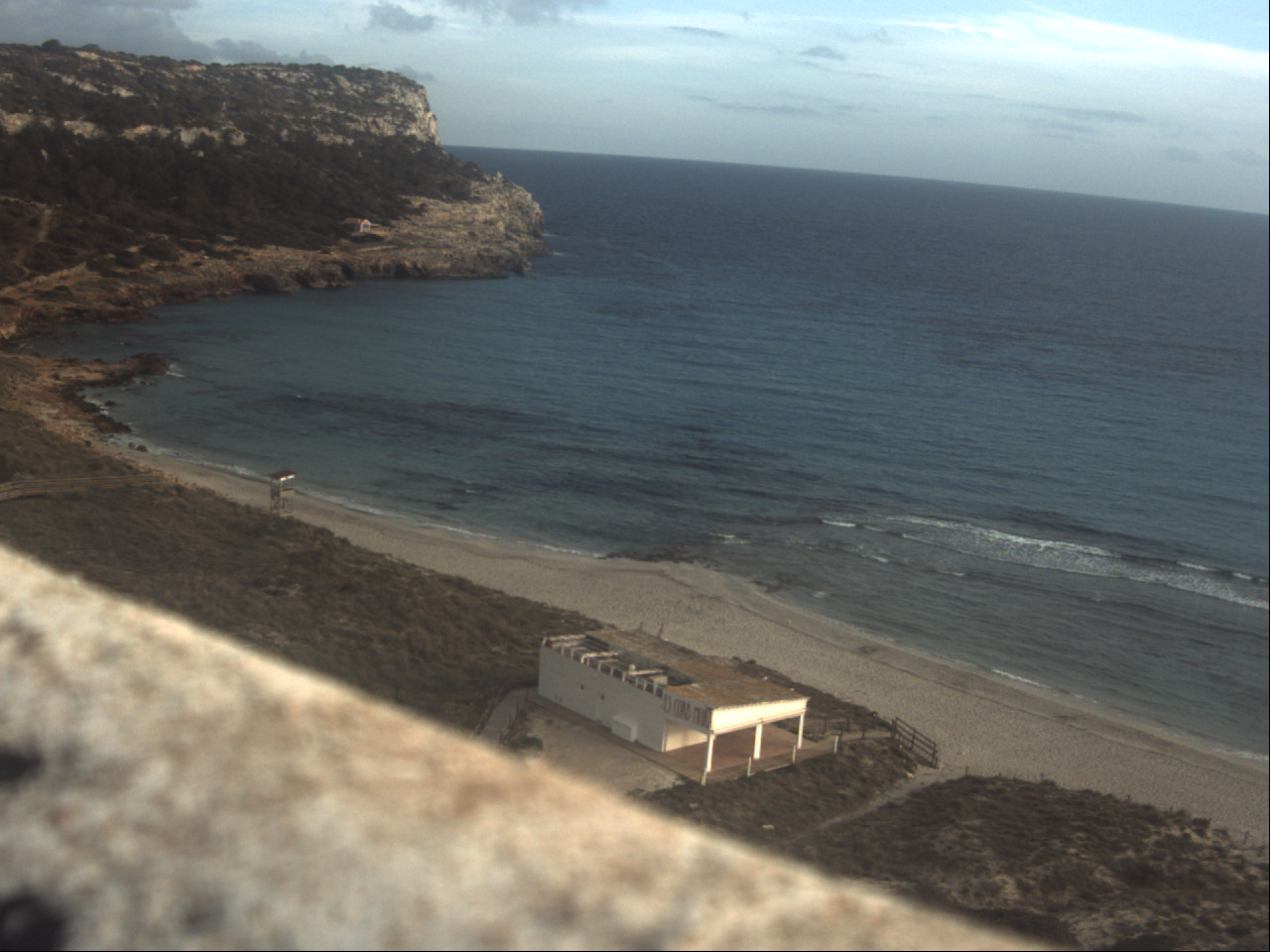
There are three beach bars/restaurants on Son Bou beach: Ses Grulles (our regular one), Xiringuito Es Corb Marí, and Ses Garces.
Basílica Paleocristiana de Son Bou
One of the island's oldest religious sites
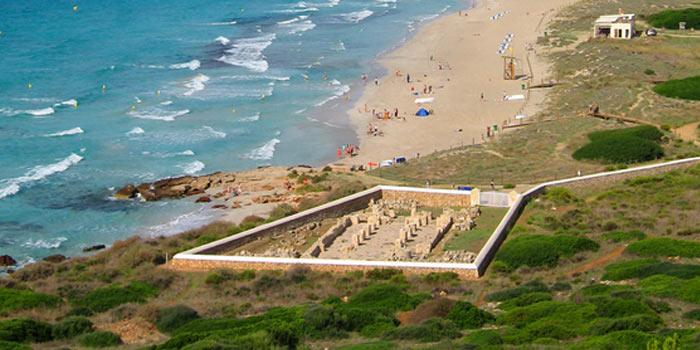
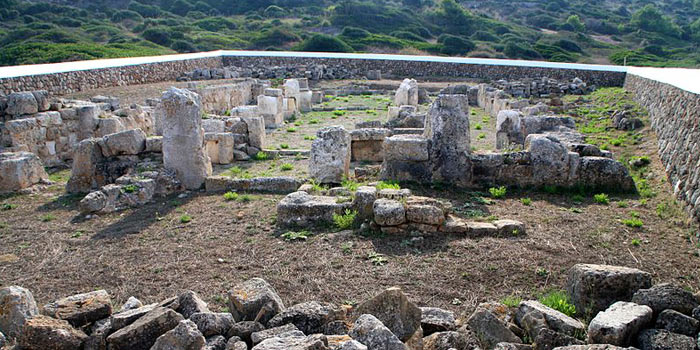
Located at the Eastern end of Son Bou beach, is one of the oldest religious constructions on the island. Key features of the site include a remarkably well-preserved baptismal font (known as Es Morter de Son Bou), the rectangular structure of a three-nave church, and an adjacent prehistoric necropolis carved into the rock.
The basilica was destroyed by fire in the 18th century, but its foundations and artifacts offer a significant glimpse into the island's early Christian history and Talayotic cultural heritage.